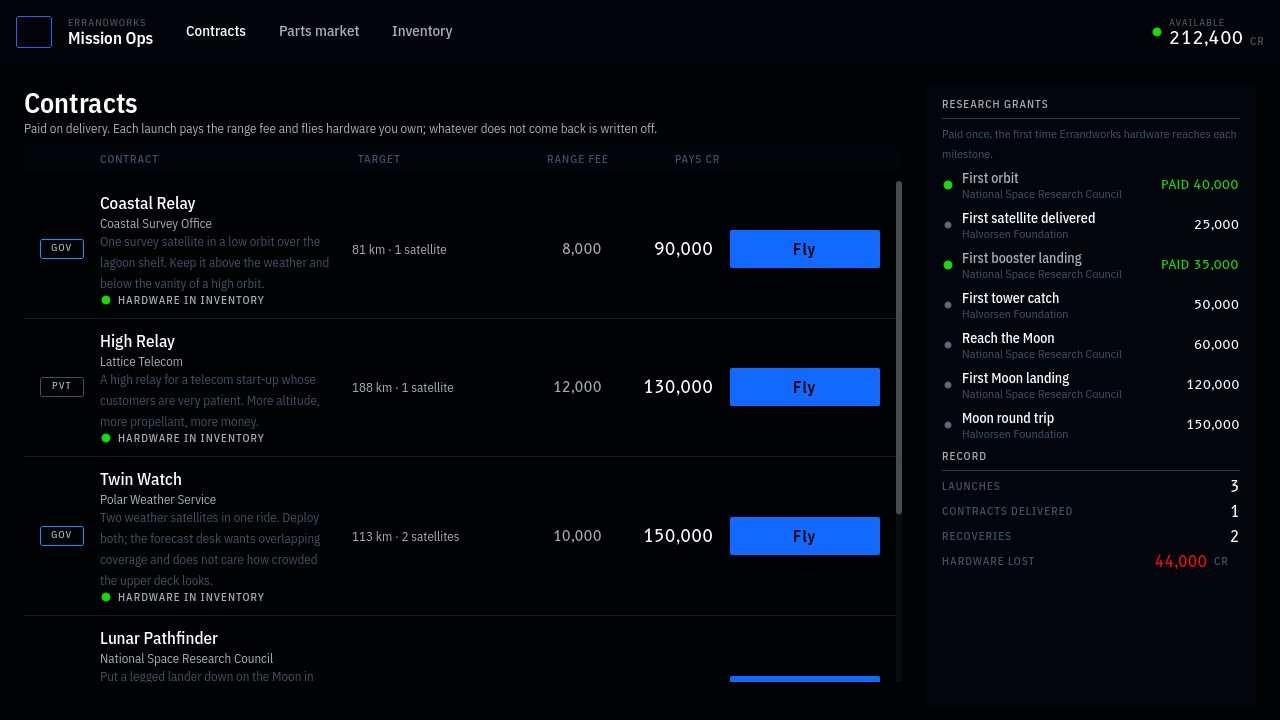
You start with one small rocket, a pad on the coast and a bank loan. Government agencies and private companies post jobs on the contract board. You buy the parts, fly the mission and get paid on delivery.
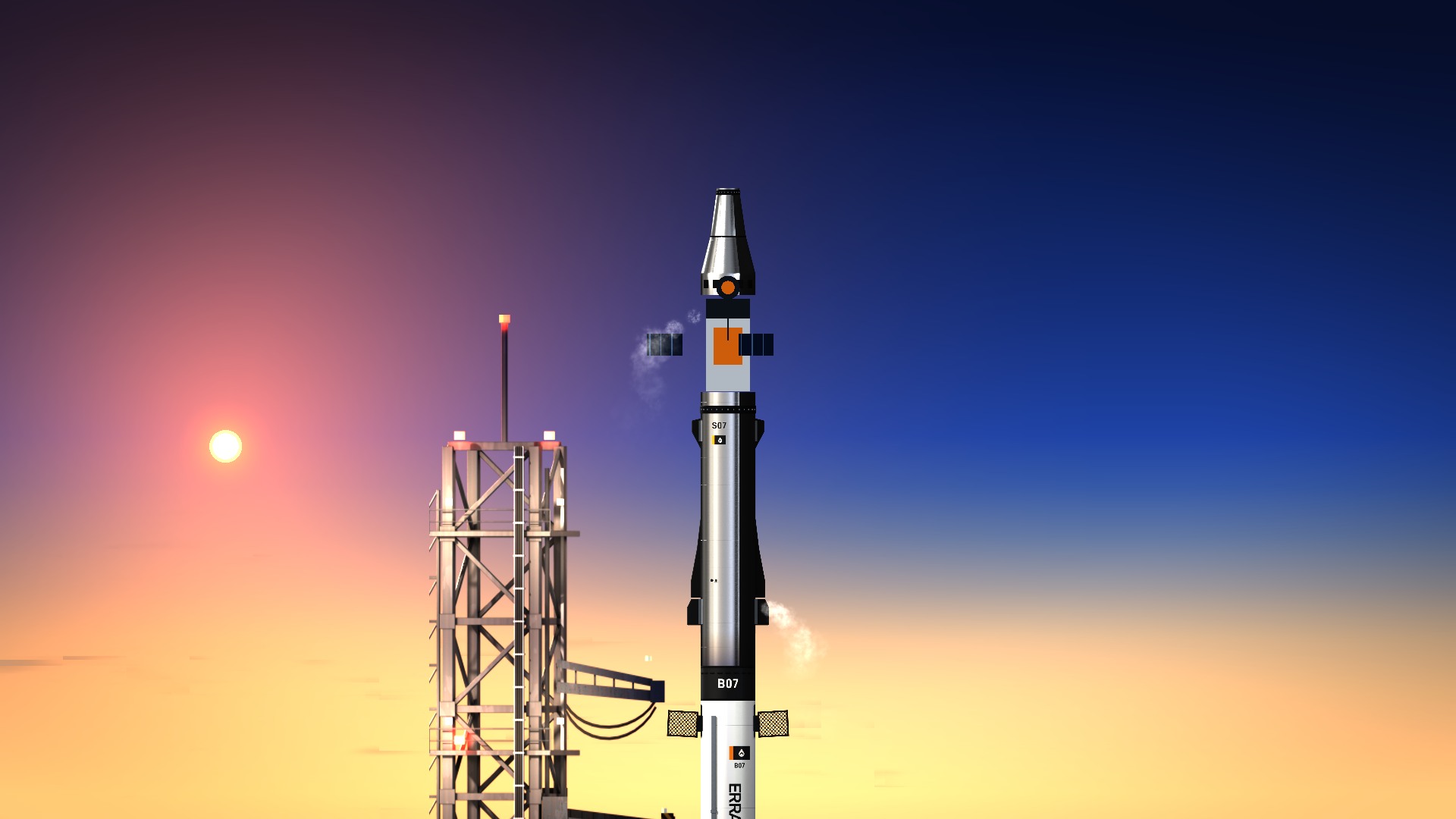
What you fly, you paid for
Every part comes out of your account. Land a booster and it goes back into your inventory for the next flight. Lose one and it’s written off. Research grants pay once, the first time you reach a milestone like first orbit or first tower catch.
Real orbits, smaller planets
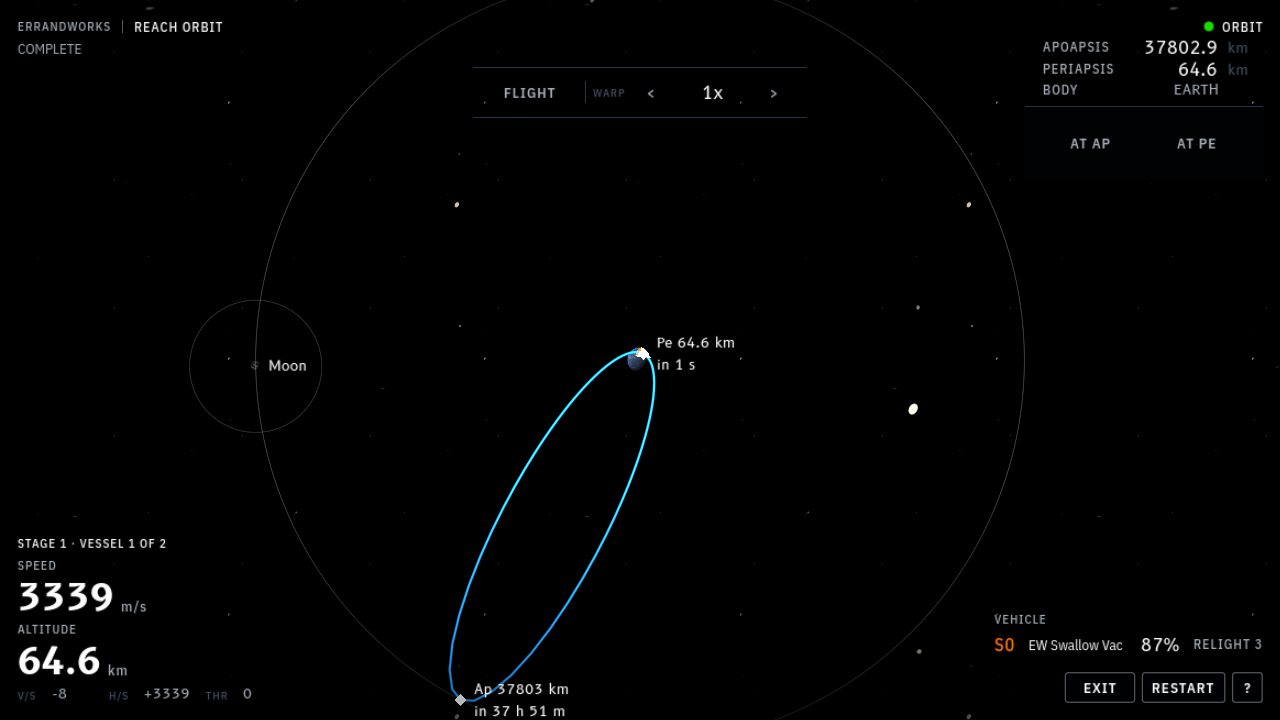
Apoapsis, periapsis, transfer burns and delta-v work the way they do in real life. Earth and the Moon are scaled down so a flight takes minutes, not hours. The autopilot can fly the ascent if you’d rather watch.
How the company grows
Each step unlocks the parts and contracts you need for the next one.
-
01
Suborbital hops and small satellites
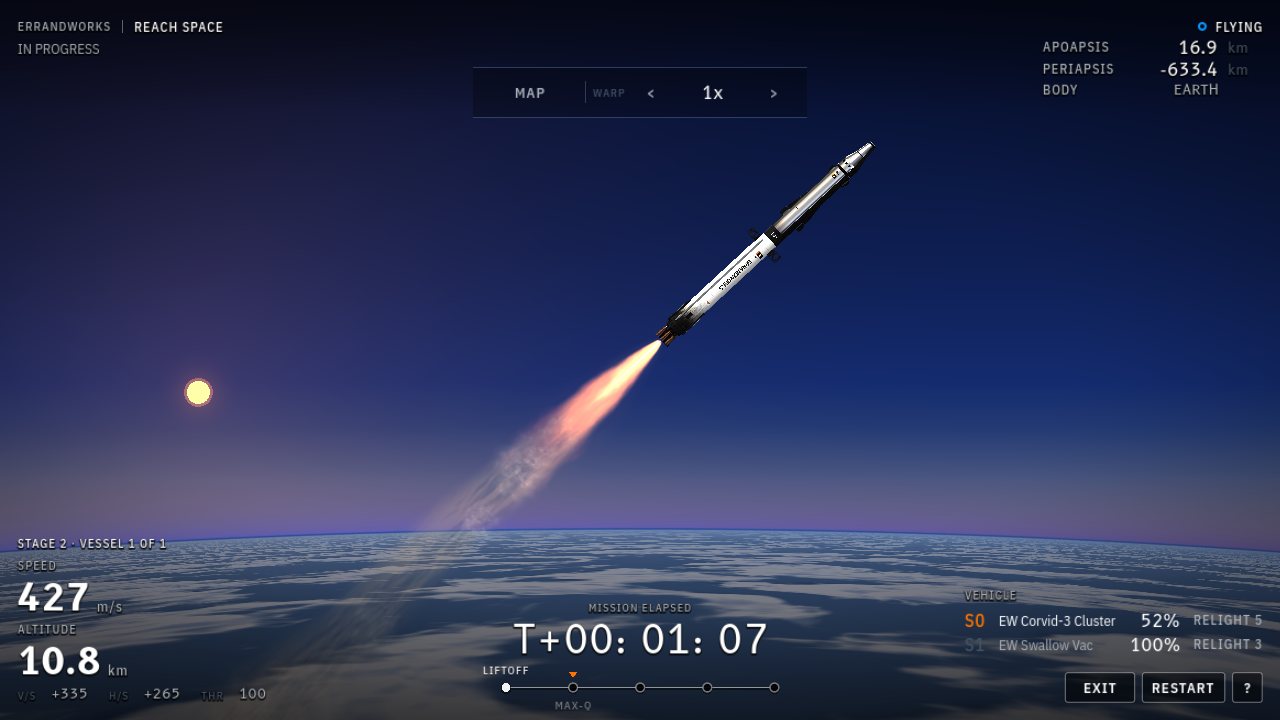
The first contracts are short. Get above the edge of space, then put a single survey satellite into low orbit. Small rocket, small paycheck.
-
02
Landing on the pad and the drone ship
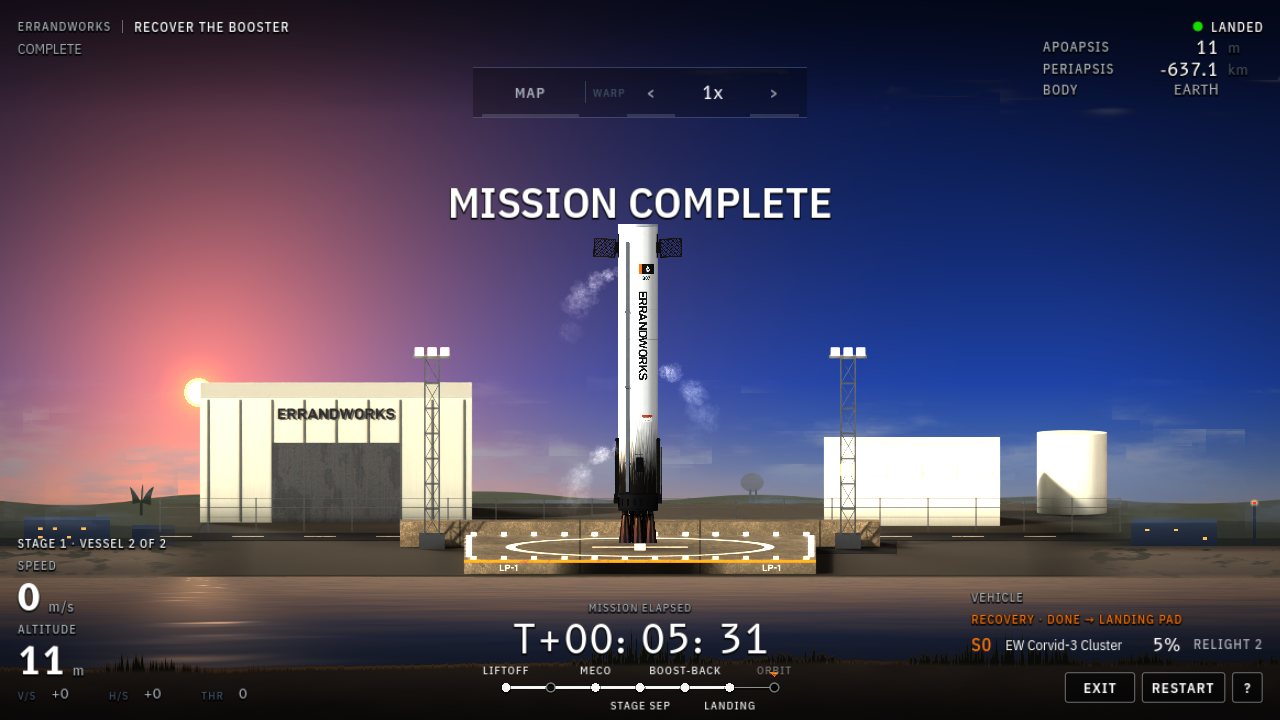
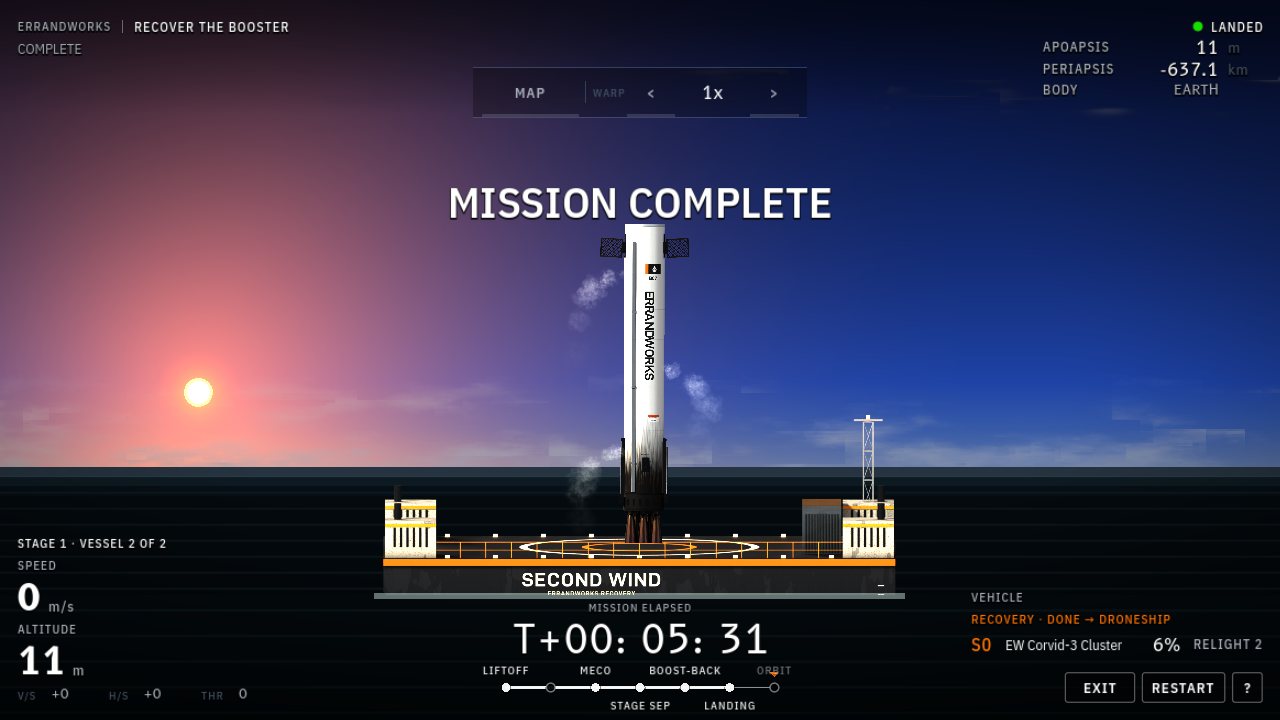
Once a booster can come back, it stops being a cost on every flight. Light missions fly back to the concrete pad next to the launch site. Heavier ones land on a drone ship out at sea.
-
03
Catching the booster
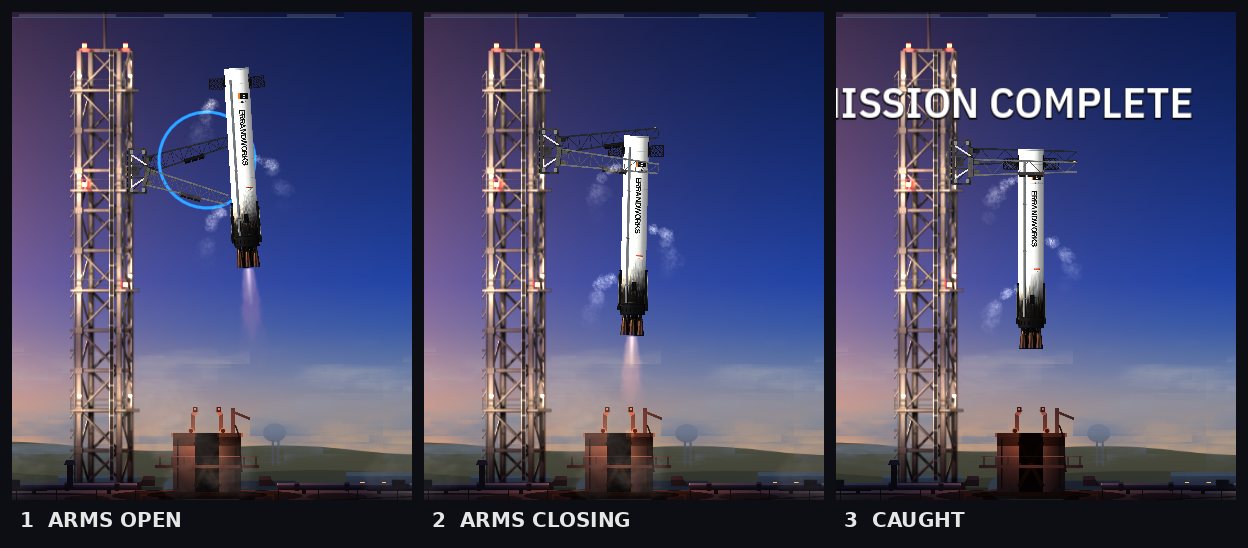
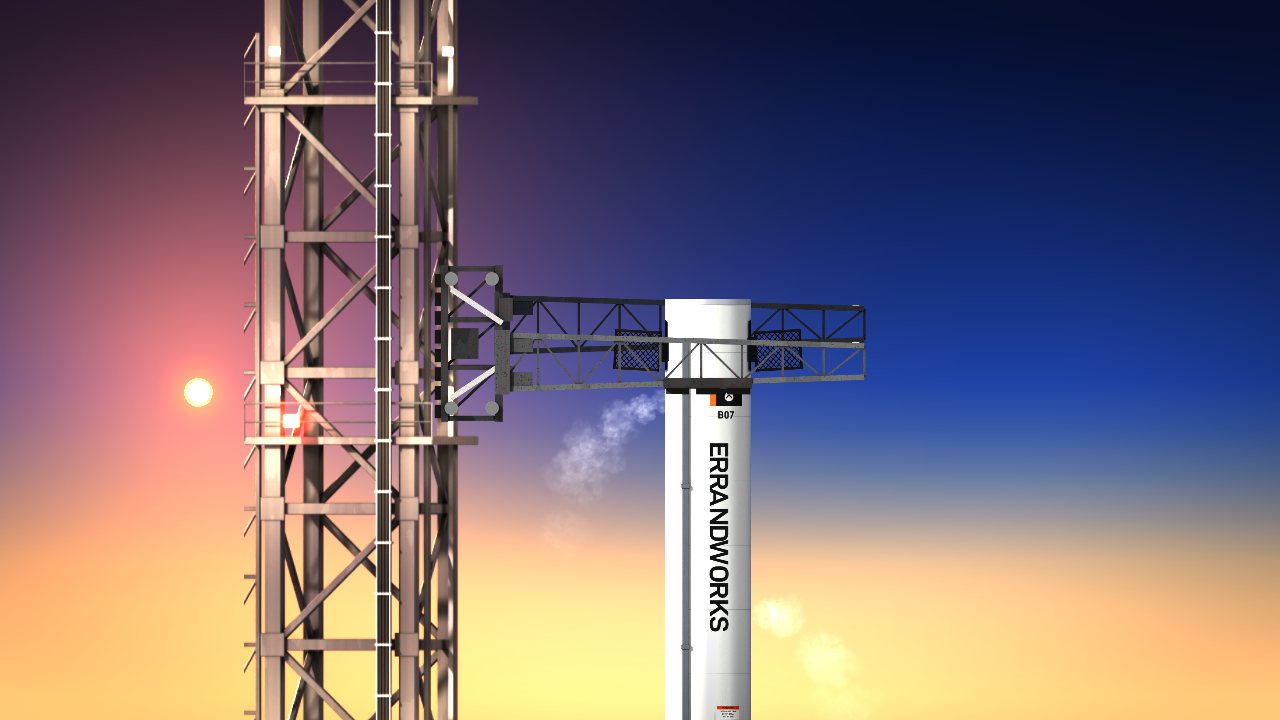
Bring the booster down beside the tower and the arms close around it while it hovers. It’s the hardest landing in the game and the one that saves you the most.
-
04
Heavier payloads and crew
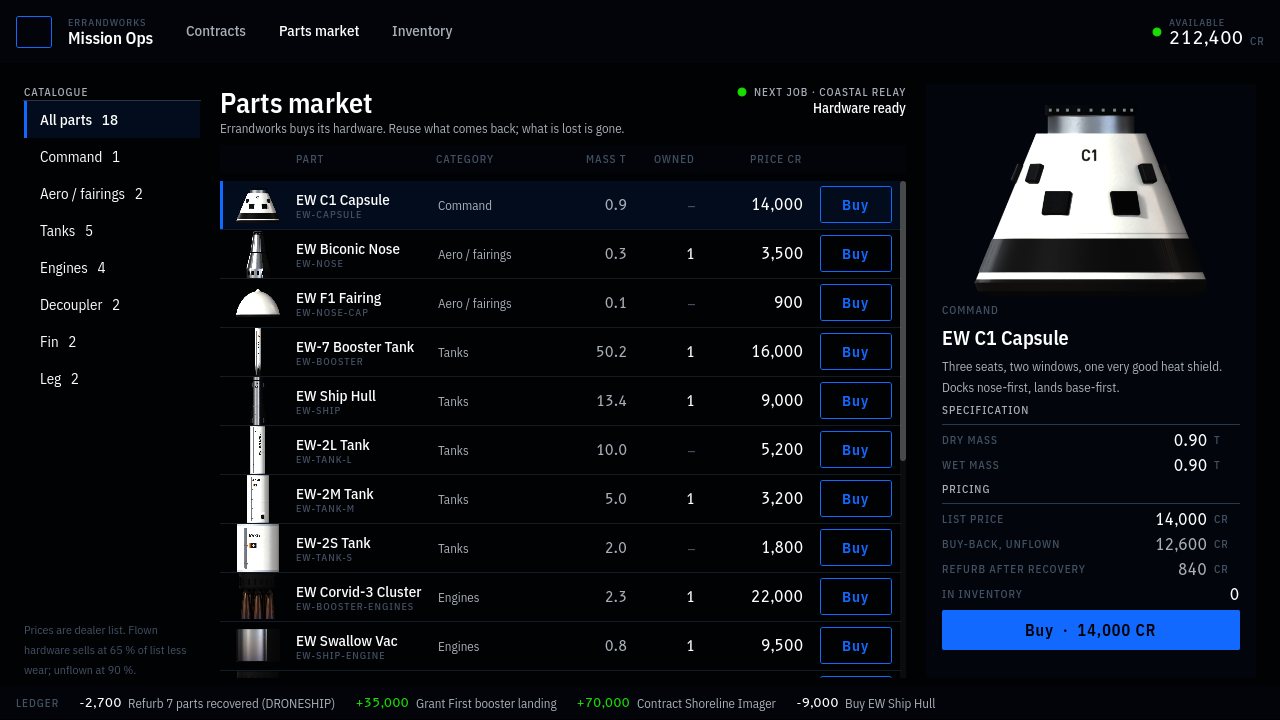
Bigger tanks, more engines, two satellites in one fairing and eventually a crew capsule. You buy every part on the market and sell back what you don’t need.
-
05
The Moon
The government contract board posts the lunar work: reach lunar orbit, put a lander on the surface, bring samples home. Those jobs and their grants pay the most in the game.
-
06
Mars, later
Mars comes after the Moon, in a later update.
Coming soon
- Steam
- iOS
- Android
- itch.io
Fuel’s Errand is in development.